Sniffling, Sneezing, and Itchy Eyes? Here’s What’s Probably Messing with You This Fall in Georgia
September 30 • 2025
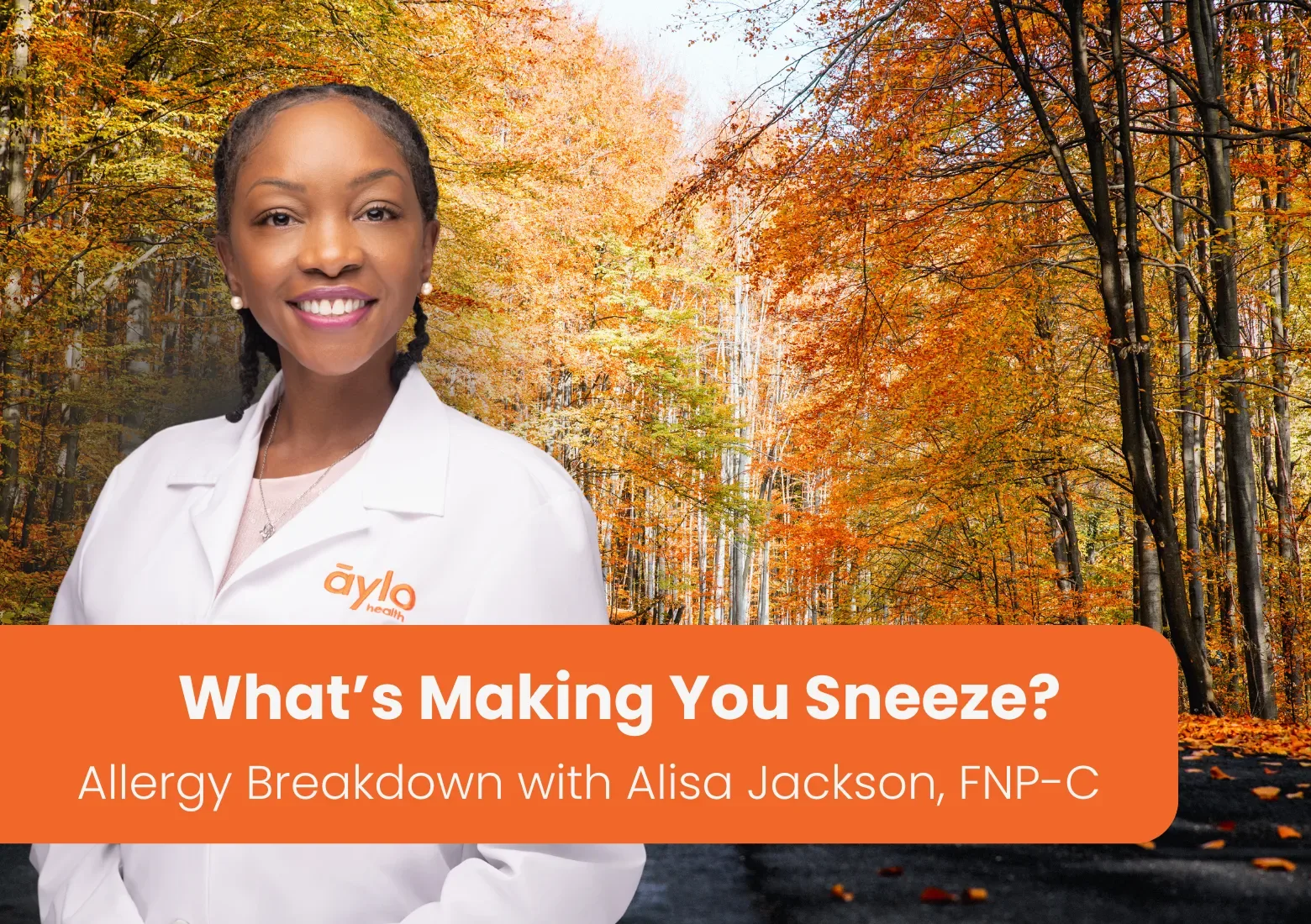
If you’re suddenly feeling stuffy, sneezy, and like your eyes won’t stop watering you’re not alone. Fall allergies are in full swing, especially here in Georgia, where our warm climate and lush landscape make for a perfect storm of airborne allergens. Let’s break down what’s likely behind your symptoms and how Aylo Health can help you feel better fast.
In the video below, Alisa Jackson, FNP-C walks us through popular fall allergies and how Aylo Health can help.
Ragweed: The Ultimate Fall Allergy Offender
Ragweed is one of the most common fall allergens, and in Georgia, it peaks in September and October. Just one ragweed plant can release over a billion grains of pollen into the air.
It doesn’t matter if it’s sunny, rainy, or if you’ve got weekend plans ragweed is relentless and loves to linger in the air.
Common symptoms:
- Sneezing
- Runny nose
- Itchy throat and eyes
- Worsening asthma symptoms
Tip: To help with ragweed allergies keep windows and doors closed during peak pollen times (mornings and early afternoons) as well as windy days. We also recommend showering after being out doors and changing clothes – especially before bed.
Mold: Hiding in Leaves and Homes Alike
As leaves start to fall and pile up, mold begins to grow especially in damp or shady areas. But mold isn’t just outside. Indoor mold from moisture in basements, bathrooms, and HVAC systems can trigger just as many symptoms.
Where it hides:
- Piles of wet leaves
- Bathrooms and kitchens
- HVAC vents or humid indoor spaces
If you’re sensitive to mold, fall can feel like a never-ending struggle, even if you spend most of your time indoors.
Tip: Humidity can cause mold so if you detect moisture indoors consider setting up a dehumidifier.
Dust Mites: Made Worse by Indoor Heating
When cooler temperatures arrive, we turn up the heat and unfortunately, that kicks up dust mites, another major allergen. These microscopic creatures live in bedding, upholstery, carpets, and curtains, and they thrive in warm, humid conditions.
Tip: Consider using allergen-proof pillow and mattress covers and washing bedding weekly in hot water.
Other Outdoor Triggers: Oak, Cedar, and Pigweed
Fall also brings an uptick in pollen from other plants like oak, cedar, and pigweed. These may not be as widely talked about as spring allergens, but they can be just as irritating especially if you’re spending time outdoors enjoying the crisp fall air.
The Good News: You Don’t Have to Tough It Out
At Aylo Health, we believe fall shouldn’t mean suffering. Our primary care providers can help you:
- Identify your specific allergy triggers
- Recommend medications to relieve symptoms
- Suggest lifestyle changes to reduce exposure
- Provide referrals to allergy specialists if needed
Whether it’s seasonal sneezing or year-round sniffles, we’ve got you covered with fast, effective care designed to help you breathe easier and live better. Want even more tips? Read our Allergy Guide.
Feeling like fall is winning? Let’s fix that.
Book an Appointment today and get back to enjoying the season.