Breast Cancer Risk: Know Your Risk and Take Action
September 16 • 2026
Breast Cancer Risk: Know Your Risk and Take Action
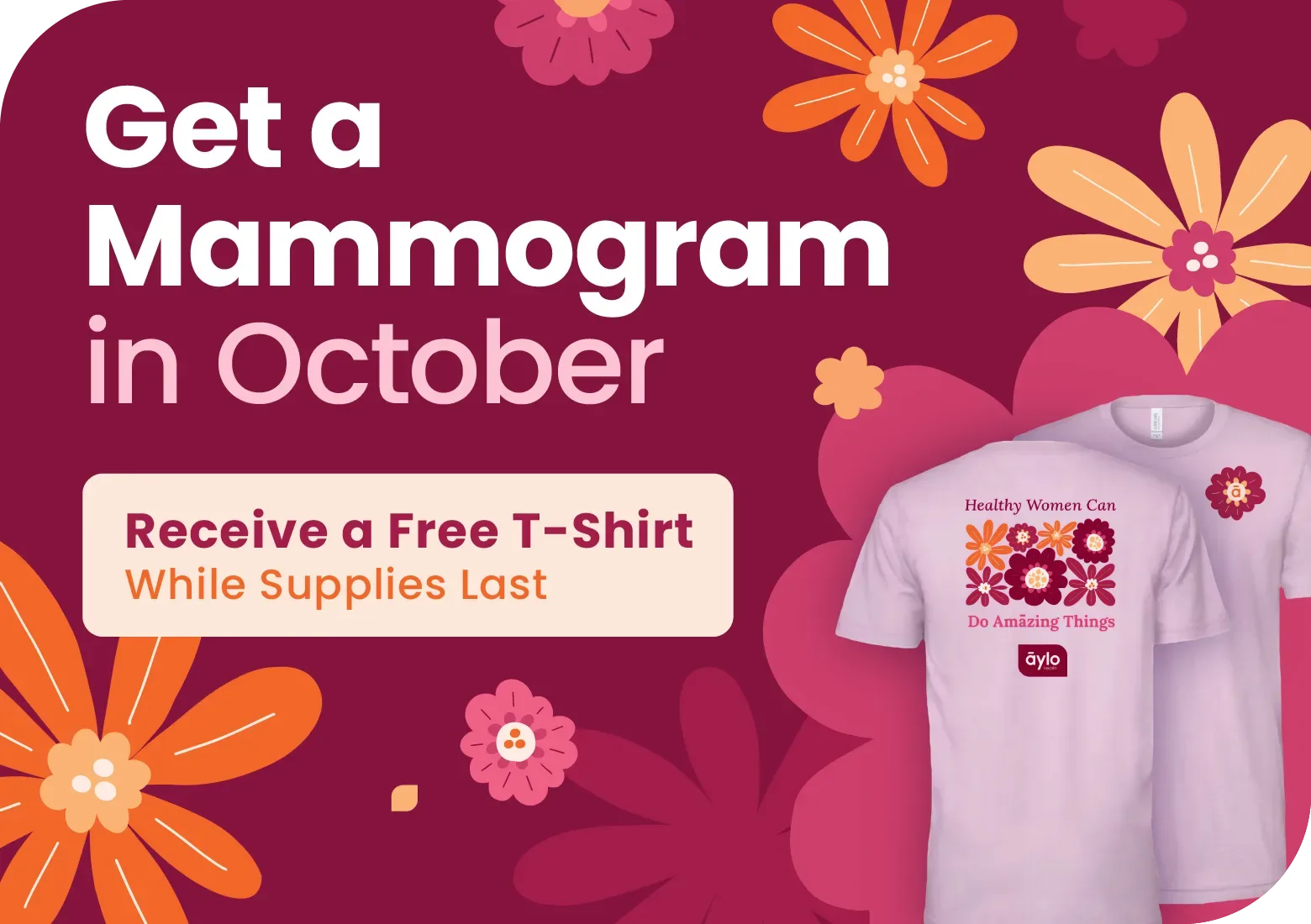
Breast cancer is one of the most common cancers among women, but there’s an empowering takeaway: knowing your risk can help you make informed decisions about your health. Aylo Health supports healthy preventative care by offering a free t-shirt if you get your mammogram at an Aylo Health Imaging Center during the month of October.
Some breast cancer risk factors, such as age, family history, and certain inherited gene changes, are outside of our control. Others—including physical activity, alcohol use, and maintaining a healthy weight—are factors we may be able to influence.
Understanding your health can help you have more informed conversations with your healthcare provider and determine which screening schedule is right for you. The CDC’s breast cancer risk factor guide is a helpful resource for learning more about factors that can affect breast cancer risk.
So, let’s break down some of the biggest breast cancer risk factors—and why staying up to date with your mammograms matters.
Family History: Genetics Can Play a Role
If breast cancer runs in your family, your risk may be higher than average. Having a close relative—such as a mother, sister, or daughter—with breast cancer can increase your risk, particularly if several family members have been diagnosed or someone developed breast cancer at a younger age.
Not all breast cancers are hereditary, but about 5% to 10% of breast cancers are thought to be linked to genetics. Certain inherited changes in genes such as BRCA1 and BRCA2 can significantly increase breast cancer risk. Learn more from the National Cancer Institute’s information on BRCA genes.
If breast or ovarian cancer runs in your family, share that history with your provider. Depending on your personal and family history, your healthcare provider may recommend a formal risk assessment, genetic testing, or a different screening plan.
Age: Risk Increases as We Get Older
Age is one of the most significant risk factors for breast cancer. According to the CDC, breast cancer risk increases with age, and most breast cancers are diagnosed after age 50.
That’s one reason regular, age-appropriate breast cancer screening is so important. Mammograms can detect breast cancer before symptoms appear, giving healthcare providers an opportunity to identify and evaluate potential concerns earlier.
Your individual screening schedule may depend on your age, personal health history, family history, breast density, and other risk factors. Talk with your healthcare provider about when you should begin screening and how often you should have a mammogram.
Lifestyle: Daily Habits Can Make a Difference
Some breast cancer risk factors are related to everyday habits. According to the CDC, factors that may increase breast cancer risk include:
- Not getting enough physical activity
- Drinking alcohol
- Being overweight or having obesity after menopause
- Smoking
The good news is that these are areas where you may be able to take action. Staying physically active, avoiding tobacco, limiting alcohol, eating a balanced diet, and maintaining a healthy weight can support your overall health and may help lower your breast cancer risk.
These steps don’t eliminate the possibility of breast cancer but a healthy lifestyle can reduce the risk.
Early Detection Can Make a Difference
Here’s the most important takeaway: early detection matters.
The American Cancer Society explains how breast cancer screening can help detect cancer early, when treatment may be more successful.
A mammogram is an important part of breast cancer screening, but it’s also important to pay attention to changes in your breasts. A new lump, skin changes, nipple discharge, or another unusual change should be discussed with your healthcare provider—even if you recently had a mammogram.
If you’re approaching or over 40, or if you have risk factors that may increase your chances of developing breast cancer, talk with your provider about the screening schedule that’s appropriate for you.
If you’re nervous about having your first mammogram, you’re not alone. Our Aylo Health guide to your first mammogram walks you through what to expect, how to prepare, and what happens during the exam.
Know Your Risk. Take Action.
Knowing your risk is the first step. Staying proactive is the next.
Whether it’s understanding your family history, making healthy lifestyle choices, or staying current with recommended breast cancer screenings, small steps can make a meaningful difference in your breast health.
Schedule your mammogram today at Aylo Health and take an important step toward protecting your breast health.